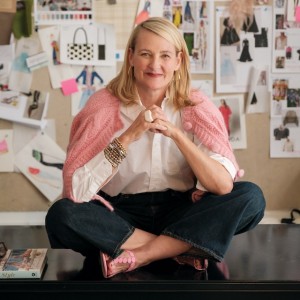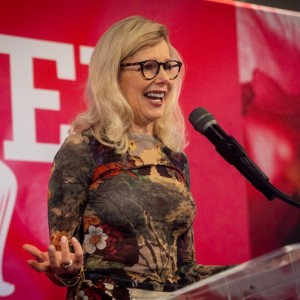



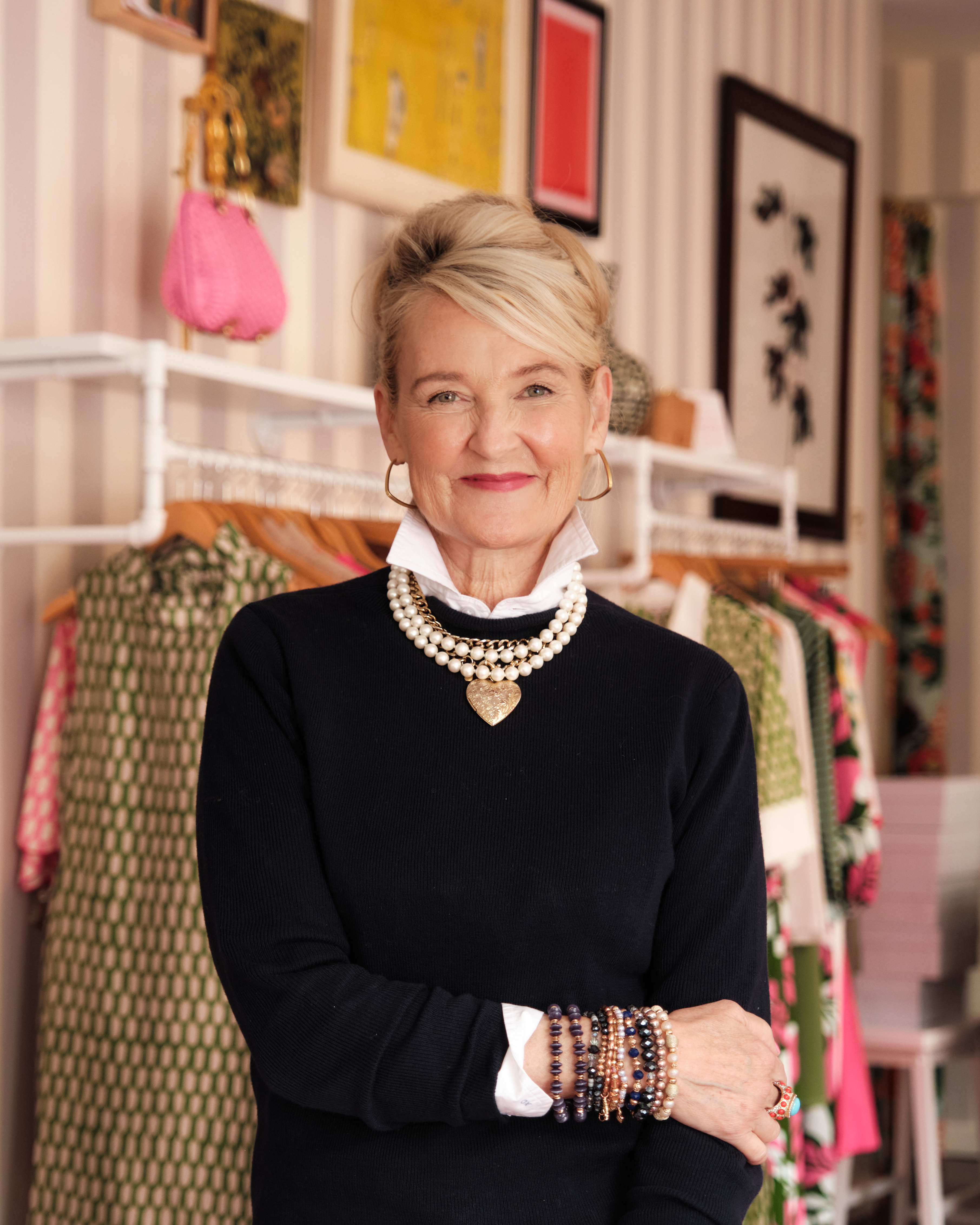
Recipe for an uncommon fashion entrepreneur: Start with a Midwest childhood far from the hustle of Seventh Avenue, add the inspiration of a 1970s girlboss TV show and the transformative power of a sister-like friendship. Finish off the whole thing with liberal doses of grit, grace and a sprinkle of serendipity. No MBA, no fancy fashion school. No New York connections. Atypical? Absolutely. But Elyce Arons, the 2026 SRQ Trailblazer Honoree, recognized for pursuing her dreams in spite of the odds, is the least “typical” entrepreneur you’ve ever met. The co-founder of Kate Spade and CEO of Frances Valentine, Elyce builds iconic brands leading with passion, gut instinct, innate kindness and an insurmountable optimism that laughs at challenges. From a young woman wrangling steers to a fashion mogul rocking kitten heels, bringing her special mix of joyful possibility to whatever she touches, Elyce is in a category by herself and proof that authenticity beats business-as-usual every time.
Three major influences early in life inspired Elyce’s path, not least of which was her down-to-earth childhood. she grew up on an Angus cattle farm in Kansas as the youngest of four daughters born to Dana and Lou Cox. Her parents instilled in their children an entrepreneurial spirit and the reality that hard work was non-negotiable. She says, “Growing up on a farm teaches one a lot of responsibility because it is 24/7. On Christmas morning, we’d get up to open our presents and my mother would say, ‘Go feed the cattle first. They don’t know it’s Christmas.’ It was always, take care of your chores first, and then you can have fun. The cattle could get out at 2 o’clock in the morning and dad would wake us up saying, ‘Get your horses saddled. We’ve got to get the cattle off the wheat.’ An irrigation pipe would burst and we’d have to go out and put a new pipe in. It was always something. Turns out, almost everything I needed to know about business I learned on a farm.”
While responsibility was necessary, Elyce’s mother Lou inspired her daughters to dream big despite the odds. A creative powerhouse, she worked as an illustrator for local retailers and newspapers in Wichita and designed costumes for local community theatre. She also happened to be a fabulous cook, and once her children left the nest, Lou flew to New York, enrolled in the Culinary Institute of America and interned for the legendary Le Bernardin before returning to the farm and starting a new career from scratch. Elyce says, “She decided to turn the whole first floor of our farmhouse into a restaurant. It’s in the middle of nowhere, 25 minutes from Wichita, some of it on dirt roads. It looked like a farmhouse on the outside, but inside, it was very beautiful with antiques and Persian rugs because my mother’s taste is exquisite. It was a huge success and I watched her do that from nothing. She had an idea and she did it.”
When Elyce was 8 years old, she discovered a vision of her career path watching TV. The 1970s were a time of huge change, particularly for women and nothing captured the essence of that era better than The Mary Tyler Moore Show, a CBS sitcom featuring actress Moore as Mary Richards, an unmarried, independent woman focused on her associate producer career on a news show in Minneapolis. Women aspired to be like Mary, and little girls idolized her. Elyce decided she was going to be Mary Richards when she grew up. She says, “When I was a young girl in the 1970s, women couldn’t go and open their own bank account or get a credit card without their father or their husband’s permission. When I think back about the fact that I was living during those times, it’s just insane. Mary became this icon to me, and I think all women of our generation, by showing that you can be single, move to a big city, and make it in a man’s career because she did it.”
But perhaps the most impactful factor in Elyce’s life was friendship. Specifically, a sister-like friendship with Kate Brosnahan, a young student she met on her first day of college at the University of Kansas. In many ways, they were polar opposites. Kate was brunette, preppy and a “citified” girl, the product of private catholic schools and social niceties, compared to blonde Elyce, a self-described homebody who sported trendy styles she gleaned from fashion magazines, who could also brand a steer, drive a tractor and once brought a freezer-full of beef from home to their college apartment. But they had more in common than they realized. A dry and sometimes absurd sense of humor, affinity for pulling pranks on each other and getting into sitcom-worthy escapades—in particular, one painfully unfortunate incident involving poison ivy and another featuring an exploding hot dog stand. Ultimately, it was the discovery that they shared a deep admiration for Mary Richards and her independent journey, in which they recognized a kindred spirit. Elyce says, “We had both been inspired by Mary to dream bigger.” Together, they navigated the maze of managing financial aid and working to pay for college. The girls transferred to Arizona State University, where they met Kate’s future husband, Andy Spade, and the three friends formed a tight-knit three musketeers friendship which would be the foundation for their future business.
Post-college, Elyce, Kate and Andy made it to New York City. The trio experienced the joys of starting out in what could be a rough city with the ’80s requisite experiences of pinching pennies to make rent, cramming several roommates into shoebox-sized flats in sketchy neighborhoods, walking over broken needles and crack pipes on the way to work and stuffing steel wool in the holes in apartment walls to keep the rats out. But there were also free concerts in the park, happy hour buffets and the excitement of being in the most vibrant city where anything could happen and typically did. And Elyce adored it. She says, “I fell in love with New York. It was just like the top of the world and everyone was so chic and fascinating and beautiful.”
After temping and working various jobs, Elyce secured a position at J.G. Hook, then Girbaud, both iconic fashion houses in the ’80s and ’90s. Kate went to Mademoiselle Magazine as an accessories editor and Andy dove into advertising. The trio worked their way up the corporate ladder. It was exhilarating but stressful, and the shine of their coveted jobs soon wore off. Elyce says, “The glamorous world of fashion was not always so glamorous. I was probably 23 or 24 working the 9-to-6 at J.G. Hook and not always happy because as an assistant, you’re working for somebody and being told what to do every second of the day. People in the fashion industry aren’t always the nicest people or their reputations are not that nice. I just remember going home one night thinking, ‘My God, I’m going to have to do this the rest of my life to support myself. This is life. This is what it is.’ The reality struck me at that point.”
Elyce craved independence, and to truly have that, she would need to create it. She says, “Katy and I had always talked about having a business together when we were in college. We didn’t know what it was going to be. We kind of thought, ‘We’ll open a store and have certain designers that we love, vintage plus modern.’ But we had no money and we had no experience aside from bartending and waiting tables and that kind of thing.”
Kate was feeling the same frustrations as Elyce. She decided to leave Mademoiselle, take a breather and figure out what to do next. Elyce remembers, “Katy felt something was missing in the handbag market. There were really beautiful expensive European bags with a lot of hardware, and then there was the canvas L.L.Bean bag. There wasn’t a whole lot in between. Katy’s taste level was so good. She knew what was missing and that there was a need for a product that was luxury but accessible and functional. It also needed to serve a purpose in women’s lives and have
that chic, simple appeal to it.”
So, in 1993, Elyce, Kate Brosnahan, Andy Spade and their partner Pamela Bell started Kate Spade, combining Kate’s first name with Andy’s last, and a brand was born. They started with the Sam bag, a simple, boxy nylon tote with clean, classic lines, with a label on the outside rather than inside the bag, a design detail that was revolutionary at the time. Elyce remembers, “I saw the first samples and said I am so in.” Andy withdrew $35K from his 401K to fund production, with each partner contributing to ongoing costs as the company grew. The Sam bag quickly became the “it” accessory of the ’90s. It was an aspirational design with an accessible price point and perfect for women on a limited budget who wanted to carry something beautiful and practical.
Early on, they realized they had to assign each member of the team a specific area of focus. Elyce says, “We all were good at different things. At the beginning we were all kind of doing everything, falling all over each other and getting into arguments about different ways to get the same task done. So we decided to divide and conquer. Katy would take design, Pamela would take production, and I would take sales and marketing. And it ended up really working well because we tried not to second-guess the other person. I think what motivated us a lot was just to not lose our shirts the whole process. And that’s when it took off. We worked 24/7 for years. I mean, honestly, there wasn’t a moment to catch our breath the whole time. It was crazy.”
Kate Spade was an outlier in the fashion world, with its founder’s Midwest sensibility and work ethic, grassroots funding, unconventional approach and not least the friendship between the partners. Elyce says, “We were so close. We felt like family. I knew we were going to be together forever, no matter what, as best friends. So our friendship was always the rock that kept everything else going. I think part of that is we respected each other. There was a lot of loyalty among the four of us to really keep it going. It was all trust and loyalty and respect, and that’s what it comes down to with a lot of humor mixed in. You have to laugh at things all the time.”
The company grew exponentially, expanding internationally and growing their product offerings and staff while preserving the family-vibe at the office. Elyce and her partners were adamant that anyone involved in the brand had a certain sensibility, not fashion know-how necessarily, but instead kindness. There was a huge focus on the type of people they wanted to work on their team. Elyce says, “We took out a ‘want-ad’ in the back of Women’s Wear Daily and the very last sentence was “must be polite.” It was intentional. I hate the word intentional now because AI uses it so much, but it was really there for a reason. We wanted people to know that this is the kind of company we’re running.” To underscore the point, they gave their staff copies of Emily Post’s Etiquette, the authoritative book on manners, underscoring the principles of consideration, respect and honesty. Elyce says of Etiquette, “I love it. I grew up with it. I still have one at my house here. It’s something we did because you have to pick the right people to fill those roles. They have to be good managers and they have to know their business but they have to do it all in a way that really
nurtures the staff and the company.”
Kate Spade expanded internationally and into licensing, and the momentum just seemed to grow. They received Council of Fashion Designers of America Awards in 1996 and 1998, and the fashion world was buzzing with excitement about this bright new design house. But the crowning moment of personal achievement for Elyce and Kate happened a couple of years into their business when they received a call from Mary Tyler Moore’s manager who said Mary wanted to come by and look at their handbags. Elyce and Kate were able to share with Mary how much her example impacted them and how she had inspired their journey and success.
In 2006, after all the hard work and hustle, the team decided to sell the company and focus on raising their families. Elyce says, “I remember when we sold Kate Spade, I was like, ‘Yay, we never have to work!’ She spent the summer with her children, but when she dropped them off at school in September, she thought, “I don’t know where to go. I’d never not worked a day in my life. I didn’t have an office to go to. Nobody was waiting for me. No job. Nothing. I didn’t really know what to do with myself.” So she decided to throw her energy into volunteering for her children’s school. She ran events, became the president of the Parents Association and Chair of the school board. She notes, “I got really involved, which was terrific and so rewarding. I’d never worked for a nonprofit before, and it was a whole different kind of thing. I learned patience and listening to other people’s ideas and worked with amazing people from all different walks of life. I learned so much.”
But Elyce and Kate soon realized they missed fashion. They wanted to create. So, in 2013, they started talking about starting another company, just the two of them. Elyce remembers, “Andy had started his own branding agency. Pamela had started her own company. So, they gave us their blessings and said, ‘We know how much you guys love working together. Just do it.’ And Katy really only ever wanted to design accessories. She loved shoes and handbags. That’s all she ever wanted to do.” So they launched Frances Valentine, an accessory business, in 2016.
Then the unthinkable happened. In 2018, Kate died by suicide. The noise surrounding her death was deafening as the media turned the tragedy into a spectacle. Elyce was consumed by grief over losing her best friend and bewildered about how this could happen. She says, “It was a shock to me as it was to the rest of the world. Honestly, the first thing her husband and I said was, ‘My God, she said she would never do anything like this. She told us all the time, ‘I would never do that.’ I haven’t had depression myself, but people who suffer with depression experience the depths that you can sink to. I can’t rationalize it. I can’t explain it to anybody because I don’t know. I think she was alone and lost hope in a moment.”
Elyce struggled to process the shock and grief. She decided that the best way to face the darkness was to focus on celebrating Kate’s life instead of the circumstances of her death. She decided to put all the good things she remembered about Kate down on paper. It wasn’t easy. Elyce says, “It took me a while to even get to a point where I could write about it because so many emotions would come flooding back. But I tried to look at all the positive things her life brought to everybody and to shine a light on her legacy and who she really was. She was a private person, but she was the funniest person I’ve ever met in my life. We played pranks on each other all the time and had a blast together. I wanted to show that person I knew, not just the creative design person that everybody knew, but the real person,the loyal, wonderful, funny friend I knew from the time we met when we were 18 years old until we were 55 and all of the different periods of friendship we went through.”
We Might Just Make It After All, a tribute to Elyce’s best friend and business partner, is a poignant, funny and kismet-laden coming of age story about the road to success. Elyce paid homage to the Mary Tyler Moore Show with the eponymous title, referencing the sitcom’s theme song of hope and optimism. It is a delicious must-read magical memory tour through a special era in New York with descriptions so on point you feel the rumble of the subways below your feet, the smell of street vendors, the buzz of excitement in the air and the faint sounds of Fine Young Cannibals in the background. Elyce notes, “A lot of people love the book because it was about New York in the ’90s. It was gritty and full of opportunity and just crazy fun. Others love the part about entrepreneurship and starting two businesses together as friends and how we did it. But I think the most important thing for me is the best friendship. And I think that’s what people walk away from this book with is, ‘My gosh, I have a best friend like that and I should really call them and tell them I love them today.’ Because those friendships are extremely special in our lives. To know someone for so long and to still have that same feeling about them all those years later is the luckiest thing in the world.”
The book was cathartic for Elyce, and after publishing it, she learned it also provided comfort for scores of others. “It helped me with my grief a lot and when I went to book signings, women would come up to me and say, ‘My gosh, I lost my best friend that way or I lost my sister that way,’ and we would hug. That made me feel less alone, and I think the book gave them hope to reflect on all of the good times and joy that person brought in life and to concentrate on those things instead of that one moment in time when they were lost. So it has really helped me get through the whole thing, focus on the good things in life and what we can do today to make it better for so many other people,” she says.
On top of losing her best friend, Elyce still had a new business to run, and trying to hold up the fort without a founder presented additional challenges to the new start-up. “Losing Katy was a huge setback because we had to readjust everything,” Elyce says. They did not have a designer and they had a lot of decisions to make to keep the company running. She continues, “All these things were coming at us. But we decided that we were just going to do it. Our team was made up of all female employees and we got it together and we did it together.” And in their efforts to pick up the pieces after tragedy, Elyce and her team created a renewed focus and expanded their offerings. “After we lost Katy, I wanted to do something as a tribute to her that wasn’t a handbag. We had been huge vintage shoppers. So we remade two of her favorite vintage pieces. One was a caftan that she’d worn on every vacation we’d ever taken together and the other was this embroidered floral sweater that she wore backwards all the time and looked adorable. So we remade those two pieces and we called it the Love, Katy collection. Of course, it sold out immediately. We reordered it and it sold out again and again and again, and people started asking for all of the vintage pieces that we had collected over the years that we were using in our campaigns. Our inspiration comes from mostly mid-century pieces from the ’50s, the ’60s and the ’70s. So, we started making swing coats and cigarette pants and sweaters and jackets and skirts. Cut to 18 months later, and we had a full apparel collection all based on vintage,” Elyce says.
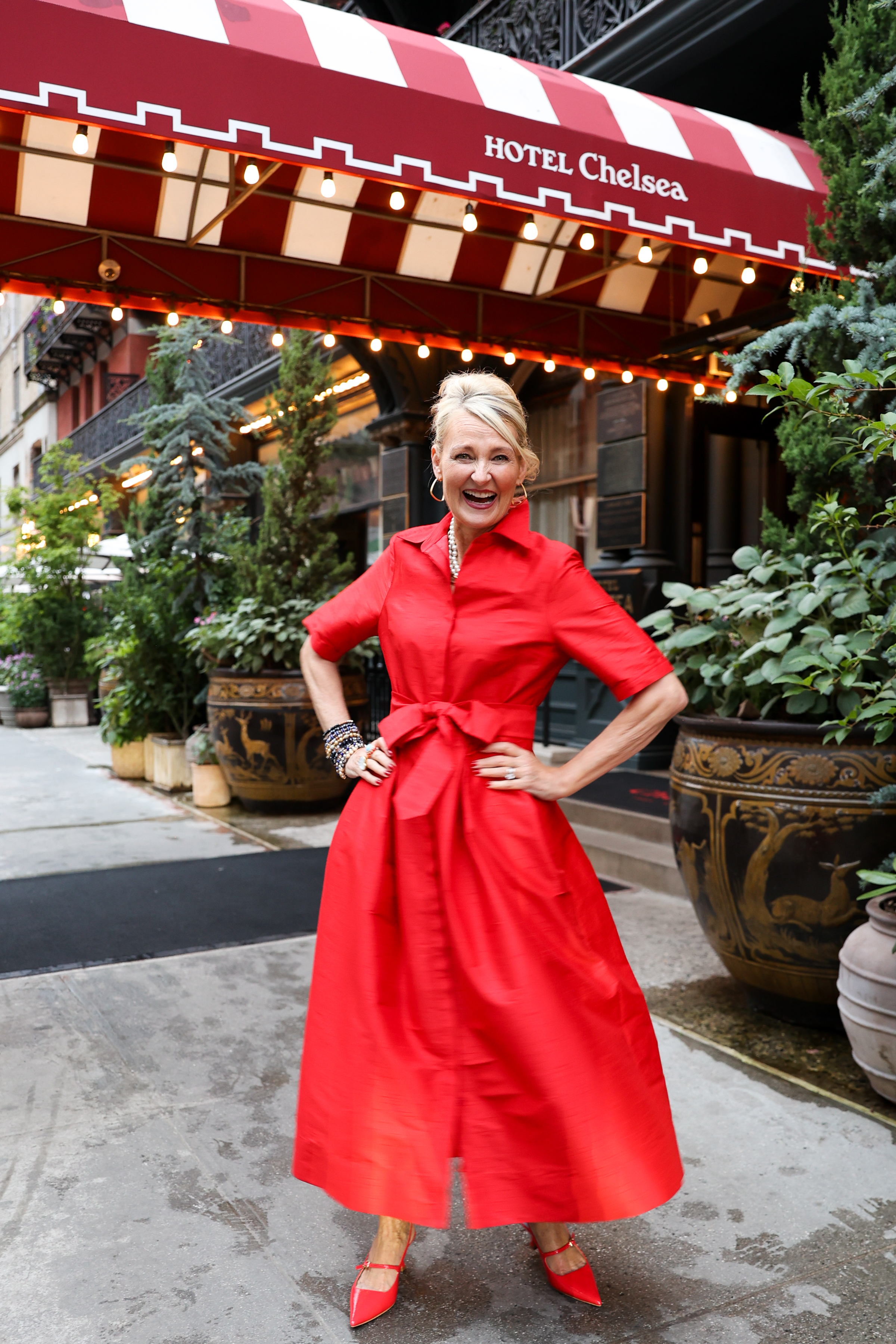
In a world that can feel increasingly monochrome, techno grey, Frances Valentine embodies the colorful, optimistic spirit of possibility and hope. The clothing and accessories are unapologetically happy. Classic silhouettes with effervescent jewel colors garnished with flowers, saucy cutouts and whimsical trims feel like a reclaiming of joy with sprinkles on top. And as with everything else she does, this quality is intentional for Elyce, creating something in the world that makes women feel good in uncertain times. Her motto is “Wear what makes you happy.” She says, “It is so rewarding. Everywhere I go, the brand just resonates with people so much. There’s so much craziness and chaos going on in the world that we see all around us. I just think it’s happy and I think if you can dress that way, it changes your whole day.”
With no formal art or fashion training, Elyce says she creates with an intuitive sense for what shapes and colors work. She says, “It’s really all instinct. It’s what we love. For me, the quality has to be there because we want things to last in people’s closets. The design is already classic. So, you’re not going to say, ‘What was I thinking?’ when you look back at something two years from now. Katy used to say, ‘If you’re not on trend, you’re never off trend,’ so we follow our own drum, make what we love and we don’t really follow trends. Of course the color palettes in prints and the fabrications we’re looking at are going to be similar to what’s happening in the market because that’s what all of the fabric houses are doing. But we have our pink that we always use and we have our green that we always use. So there are things that we know that are traditionally Francis Valentine that we’ll always have.”
Elyce says the joyful quality of her brand is reflected throughout the company. “There’s a real optimism in our team here and they help make it all happen. It can’t just be in a print or a piece of a dress. It’s got to be across the board in the people who are talking to you and the marketing campaign and our social media. It’s the ethos that you live by. And we choose joy; we choose to be happy and to solve problems in a really nice way and not get upset about things. I have been lucky twice in my life to work with a team of people who are magnificent. I’m knocking on wood. I feel so lucky to work with the team I work with here today because our old financial advisor said, ‘You better be careful because lightning doesn’t strike twice.’ I feel like it has because I’ve gotten lucky again in working with this group of people. So it’s just just good things all the time which is really, really nice. I feel like if you give good you get good,” she says.
In addition to the hard work and perseverance Elyce has invested in her goals, there have been many serendipities on her path, and she believes she has two very special invisible partners cheering her on. She says, “I feel like I have angels around me because opportunities just come to us. We don’t even have to search them out.” As was the case when The Mary Tyler Moore Vision Initiative (MTM Vision) recently called and said they would love to partner with Frances Valentine. Elyce asked if they had reached out because of her book title referencing the Mary Tyler Moore theme song. Nope, they hadn’t even seen the book. Total kismet. But the story just gets better. Dr. S. Robert Levine, Mary Tyler Moore’s husband and CEO of MTM Vision, started the foundation in his late wife’s honor to help prevent vision loss in people with diabetes, something Moore suffered from. He invited Elyce and the Frances Valentine team to his Connecticut farm before he put it on the market. Elyce remembers, “He said, ‘you have to see Mary’s closet before we auction off all the stuff and we sell the farm.’ So, she packed her creative team into a van and drove out to the farm where Dr. Levine gave them a full tour of the house. And when they reached Mary’s closet, the holy grail for Elyce, she says, “I’m up in her closet and I didn’t even want to touch anything because I’m thinking the oil on my fingers is going to wreck her clothing and he reaches over my shoulder, pulls out a dress and says, ‘Try this on and try this on and try this on.’ So, I got to try on all of Mary’s clothes, which was just a pinch-me moment.”
A bigger “pinch-me” moment was just around the corner for Elyce. Two weeks after she had full run of Mary Tyler Moore’s closet, Dr. Levine called her again and asked if she could come and pick up all Mary’s clothes and store them during his move. Of course, Elyce agreed, and drove out with someone from her office to pack up all the items when Dr. Levine walked in the room and gave her a huge surprise. She says, “We’re packing up the clothes and he walks up with an envelope and says, ‘I can’t give this to you for good, but I’m giving it to you for safekeeping.’ Can you imagine what was in that envelope? It’s the hat she threw up in the air on the show. Yeah, I have the hat. It’s right here. Isn’t that fantastic?”
And then something magical happened. Frances Valentine started talking about how they could support MTM Vision and decided to design a whole collection around Mary Richards, recreating all the iconic pieces from her shows with 20% of the net sales from the collection going to benefit MTM Vision helping advance research and advocacy to end vision loss from diabetic retinal disease. Elyce says, “We’re doing her peacoats, the hat, we’re doing a whole bunch of Mary pieces. She wore turtlenecks all the time. She wore plaid. We’re doing these beautiful wool plaid jackets, and then we’re working on the spring collection right now. But I’m so excited about it because it just came to us out of the blue. They said, ‘We called you because we loved what you were doing and it reminded us of Mary.’ How crazy is that?” I think Mary and Katy are up there making things happen for us and that they're still really involved.”
Elyce says she is relishing this era of her life and has a word of encouragement for women who think it’s too late to achieve your dreams. She says, “It’s so easy to get caught in that cycle of ‘I’m too old’ or ‘there’s nothing for me, I’m not valued, I don’t know what I could do.’ It’s hard because you’re looking at a menu of a gajillion things you could do and it’s like going to a Greek diner hungry. Do you have the lobster thermidor? Or do you have the eggs benedict? What do you feel like? And having to go after one of those with such force, it scares people. It’s a lot because you feel like you’re committing to this one thing and thinking do I want this the rest of my life kind of thing. But it doesn’t have to be that way. I believe you can do anything you set your mind to. There was a guy named Earl Nightingale who was an executive coach way back before they even had executive coaches. His mantra was, ‘We become what we think about.’ So if you think about something all the time and your mind is constantly working on how you go about doing it, you can become that thing. Think about what you want to do, even if it’s in a small way, and have confidence in what you already know because, especially if you’re a mom, you know more than most men do about anything because you’re a multitasker. So, you’ve already got one leg up on a lot of people. Just have confidence in your dream and figure out the ways to get there. If you can’t jump over the mountain, go around the mountain. There are ways to get anything done and so many ways to research, whether it’s a product or a service you’re providing, so you can see what’s out there already. Do it better. Offer more than they do.”
After a lifetime of reaching for the stars, Elyce notes her dreams have come true and she made it after all. She says, “This is the best time in my life. I’m 63 years old. I feel free. I feel like I am experienced. I don’t know everything, but I learn every day. I think women of our age have this opportunity for this right now to be the most productive time in our lives and it’s terrific. My kids are adults. I’m through a bunch of different things that plagued me in my 40s and 50s. Now I am free and it’s my time. I love it and I’m enjoying every minute of it.” SHE ROARS